
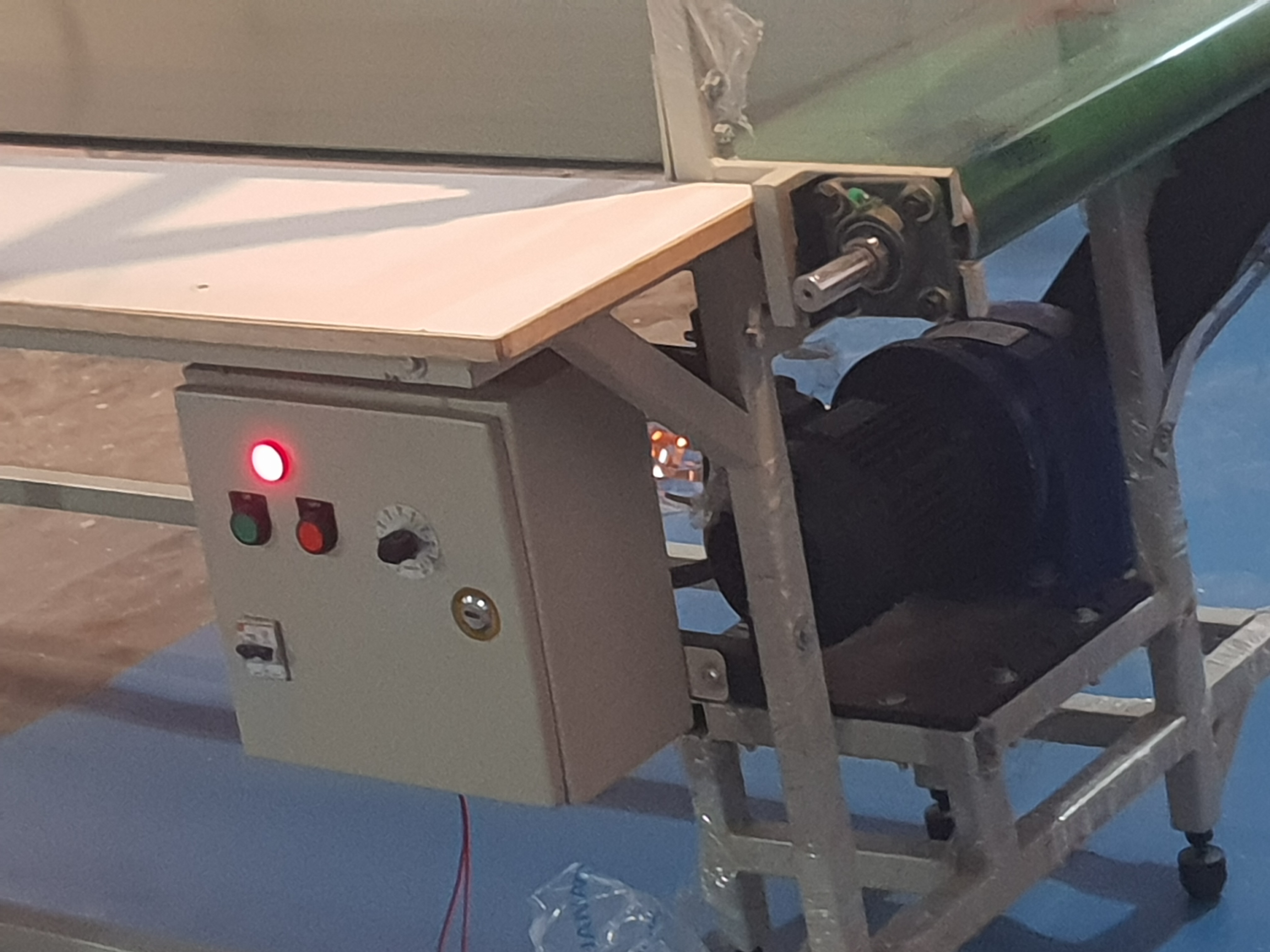
A belt conveyor is a material-handling system that uses a continuous belt to move items from one point to another. You’ll see them everywhere: factories, airports, mines, warehouses, even grocery checkouts. Main parts Belt – usually rubber, PVC, PU, or fabric-reinforced Pulleys – drive pulley (powered) and tail pulley (returns the belt) Motor & gearbox – provide motion Idlers/rollers – support the belt and load Frame – the structure holding everything together How it works The motor turns the drive pulley, which pulls the belt forward. Material placed on the belt moves along with it until it reaches the discharge point. Common types Flat belt conveyor – general material handling Inclined/declined conveyor – moves items up or down Trough belt conveyor – bulk materials (coal, grain, ore) Modular belt conveyor – plastic interlocking segments Cleated belt conveyor – prevents materials from sliding Advantages Simple & reliable Continuous operation Low operating cost Handles light to heavy loads Typical applications Manufacturing & assembly lines Mining & quarrying Warehousing & logistics Food processing Airports (baggage handling)


This is your website preview.
Currently it only shows your basic business info. Start adding relevant business details such as description, images and products or services to gain your customers attention by using Boost 360 android app / iOS App / web portal.
conveyor belt near me
2026-02-02T15:50:09
A belt conveyor is a material-handling system that uses a continuous belt to move items from one point to another. You’ll see them everywhere: factories, airports, mines, warehouses, even grocery checkouts. Main parts Belt – usually rubber, PVC, PU, or fabric-reinforced Pulleys – drive pulley (powered) and tail pulley (returns the belt) Motor & gearbox – provide motion Idlers/rollers – support the belt and load Frame – the structure holding everything together How it works The motor turns the drive pulley, which pulls the belt forward. Material placed on the belt moves along with it until it reaches the discharge point. Common types Flat belt conveyor – general material handling Inclined/declined conveyor – moves items up or down Trough belt conveyor – bulk materials (coal, grain, ore) Modular belt conveyor – plastic interlocking segments Cleated belt conveyor – prevents materials from sliding Advantages Simple & reliable Continuous operation Low operating cost Handles light to heavy loads Typical applications Manufacturing & assembly lines Mining & quarrying Warehousing & logistics Food processing Airports (baggage handling)
2026-02-02T15:50:09


Keywords
- rubber PVC PU conveyor belts
- food processing conveyor systems
- warehouse logistics conveyor
- mining and quarry conveyor
- airport baggage handling conveyor
- conveyor belt for factories
- modular plastic belt conveyor
- inclined and declined conveyor systems
- bulk material conveyor types
- motorized belt conveyors
- conveyor belt parts and components
- industrial conveyor belts
- material handling conveyor
- belt conveyor system
- conveyor belt near me
Submit Your Enquiry